
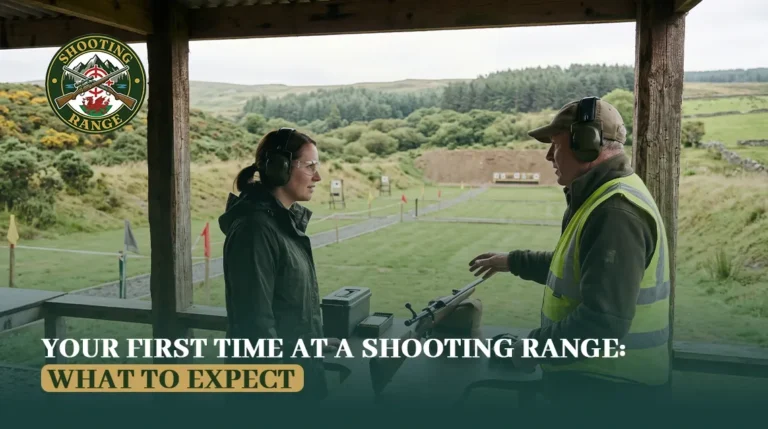
Walking into your first visit to a shooting range can feel a little daunting. Most of us only know ranges from films, where everything looks loud and chaotic. The real thing is calmer, better organised and a lot friendlier. This guide covers what happens, what to wear and how to stay safe.
What Happens During Your First Time at a Shooting Range
Most people want to know what happens at a shooting range before they book. The short answer is that you won’t be handed a firearm and left to get on with it. Everything is structured and every step is explained as you go.
Here’s how a typical visit runs:
- Arrival and sign in: You’ll give your details, confirm you’re comfortable with the session and fill in any paperwork the range needs.
- Safety briefing: An instructor explains the rules, the range layout and what the commands mean.
- Equipment fitting: You’re given ear defenders and eye protection, and shown how to wear them properly.
- Introduction to the firearm: The instructor shows you how it works, how to hold it and how to stand.
- Supervised shooting: You fire at a target, with someone beside you the whole time.
The first few minutes are mostly listening and watching. That’s deliberate. By the time you’re at the firing line, you know exactly what’s expected of you.
Is a Shooting Range for Beginners Right for You?

A shooting range for beginners is built around people who have never touched a firearm. You don’t need to be sporty, strong or particularly steady. Plenty of first timers are surprised by how relaxed the atmosphere is and by how many other newcomers are there on the same day.
Good ranges expect questions. If you’re unsure about anything, such as how to stand or what a term means, ask. Instructors would much rather answer ten silly questions than watch someone guess.
Some people go along out of curiosity. Others are trying a new hobby, joining friends or celebrating something with a group. All of those are perfectly good reasons to turn up.
What to Wear to a Shooting Range
Clothing matters more than people think and it’s an easy thing to get wrong. The main aim is comfort and protection. A few practical points:
- Closed toe shoes: Trainers or boots are ideal. Sandals and flip flops are a bad idea.
- Fitted and comfortable clothes: A normal T-shirt or jumper works well. Avoid anything loose that could get in the way.
- A high neckline: Low cut tops can be uncomfortable because spent cases may bounce around the lane.
- Layers: Indoor ranges can run cool and outdoor ones depend entirely on the weather.
- Hair tied back: Long hair is much easier to manage when it’s out of your face.
If you wear glasses, bring them. Safety eyewear usually fits over them but check with the range beforehand. Leave expensive jewellery at home and don’t wear anything you’d be upset to get dusty.
Shooting Range Safety Rules You Need to Know
Every range runs on a handful of firm rules. Learning the shooting range safety rules early makes the whole session feel less stressful because you know exactly where the lines are. They’re also simpler than most people expect.
The core rules look like this:
- Treat every firearm as if it’s loaded even when you’re told it isn’t
- Keep the muzzle pointed in the safe direction which is always downrange
- Keep your finger off the trigger until you’re ready to fire
- Follow every instruction from the range officer straight away
- Wear your ear and eye protection at all times when shooting
- Never handle a firearm when others are downrange or when the range is called cold
What a Typical Shooting Range Experience Feels Like

The shooting range experience is quieter and more focused than people imagine. With ear defenders on, the noise is muffled, and you spend most of your time concentrating on small things like your stance, your breathing and your grip.
Your first few shots will probably feel strange. It’s normal to miss the target completely and it’s normal to feel a little nervous. Most beginners relax after the second or third round once they realise how controlled everything is.
By the end, you’ll likely have a target to take home. Many people keep it as a souvenir of their first session. You’ll also have a much clearer idea of whether you want to come back.
Tips to Make Your First Visit Easier
A few small habits will help you get more out of the day.
- Book in advance: Beginner sessions often have limited spaces so it’s worth checking availability first
- Eat beforehand: Shooting needs focus and a hungry mind drifts quickly
- Arrive early: Rushing makes you tense and tense beginners find the briefing harder to absorb
- Listen more than you talk: The instructor’s advice is the fastest way to improve
- Be patient with yourself: Nobody hits the bullseye straight away
Final Thoughts
A first visit is far less intimidating than it sounds. With a proper briefing, the right clothing and a clear understanding of the rules, most people leave feeling confident and keen to go back. Go in curious, ask plenty of questions and enjoy it.
Frequently Asked Questions
What happens when you visit a shooting range for the first time?
You’ll sign in, receive a safety briefing and get fitted with protective gear. An instructor then walks you through handling the firearm before you shoot under close supervision.
What should I wear to a shooting range?
Wear closed toe shoes, comfortable fitted clothing and a top with a high neckline. Bring layers, tie long hair back and skip loose or dangling items.
Do beginners receive instructions before starting a shooting session?
Yes. Beginners always get a full briefing covering safety, handling and range commands before they shoot. An instructor stays with you throughout.
What are the basic shooting range safety rules?
Treat every firearm as loaded, keep it pointed downrange and keep your finger off the trigger until ready. Always wear eye and ear protection, and follow the range officer’s instructions.
Do I need previous experience before visiting a shooting range?
No. Most ranges welcome complete beginners and tailor the session to your level. All you need is a willingness to listen and follow the rules.